
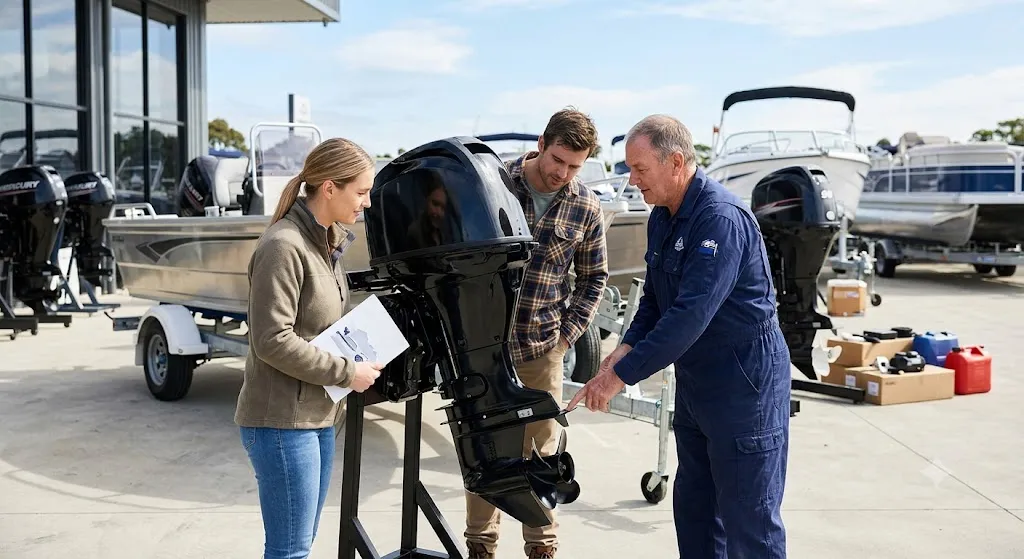
Buying a first outboard motor can feel complicated because there are many details to understand at once. Horsepower, shaft length, controls, engine weight, fuel use, and maintenance all influence whether a motor works well with a particular boat.
For a first-time owner, the smartest approach is to begin with the boat rather than the engine catalog. The vessel’s size, transom design, intended use, and usual passenger load create a clear starting point for choosing suitable power.
Start With the Boat Plate
Most boats have a capacity plate or manufacturer information showing maximum horsepower and weight limits. These figures should guide the entire buying process.
Going beyond those limits can affect handling and safety. Staying within them also makes it easier to narrow down engine choices without wasting time on unsuitable options.
Decide How You Will Boat
A fishing boat used on a quiet lake has different requirements from a family boat used for weekend cruising. The way the vessel will be used should influence engine size and features.
Before looking at models, write down the activities you expect to do most often. This could include fishing, towing, coastal cruising, or short recreational trips.
Learn the Meaning of Horsepower
Horsepower is not simply about top speed. It also affects acceleration, load carrying, and how easily a boat reaches planing speed.
A motor should have enough power for the boat’s usual workload without being unnecessarily large. Proper matching often produces better overall performance than choosing the highest possible rating.
Look at Real Shopping Options
Once the basic requirements are clear, it becomes easier to review available Outboard Motors for Sale without getting distracted by engines that do not suit the boat.
At this stage, focus on practical details such as horsepower range, shaft length, engine weight, starting system, and control type. This creates a much more useful shortlist.
Do Not Forget Shaft Length
Shaft length is one of the easiest specifications for beginners to overlook. The correct length depends on the transom height and overall boat design.
If the motor sits too high or too low, performance can suffer. Propeller grip, cooling, and handling may all be affected by an incorrect setup.
Think About Weight Distribution
The motor adds significant weight to the stern, so engine weight should be checked carefully. A heavier unit can change how the boat sits in the water.
Passenger placement, fuel tanks, batteries, and equipment also contribute to balance. Looking at the complete load helps prevent poor handling once the boat is fully prepared for use.
Compare Controls Before Buying
New boat owners may come across tiller steering, remote controls, mechanical systems, and electronic options. Each setup creates a different operating experience.
The best control system depends on the boat’s layout and the owner’s comfort level. Easy access and predictable response are more important than choosing the most advanced option.
Understand Brand-Specific Choices
After determining the required horsepower and setup, some buyers may narrow their search to a particular manufacturer. A Mercury Outboard may be one option among several depending on the boat and intended use.
Rather than focusing only on the badge, compare specifications, service access, maintenance needs, available controls, and compatibility with the vessel.
Budget for More Than Purchase
The engine price is only one part of the total cost. Installation, controls, rigging, fuel, servicing, and replacement parts can all affect the final amount spent.
Planning for these costs early can prevent surprises later. It also helps a buyer compare different engine options on a more realistic basis.
Build a Simple Maintenance Routine
First-time owners do not need to become mechanics, but they should understand basic care. Checking the propeller, watching cooling-water flow, keeping the engine clean, and following service intervals are useful habits.
Saltwater users should pay extra attention to flushing and corrosion prevention. Regular care can make ownership easier and help protect the motor over time.
Conclusion
Buying a first outboard becomes much easier when the process is broken into practical steps. Start with the boat’s limits, define how the vessel will be used, and then compare engines that genuinely fit those requirements.
The right decision is rarely based on one specification. Power, weight, controls, shaft length, maintenance, and operating costs should work together. A balanced choice gives a new boat owner a better foundation for confident and enjoyable time on the water.
